


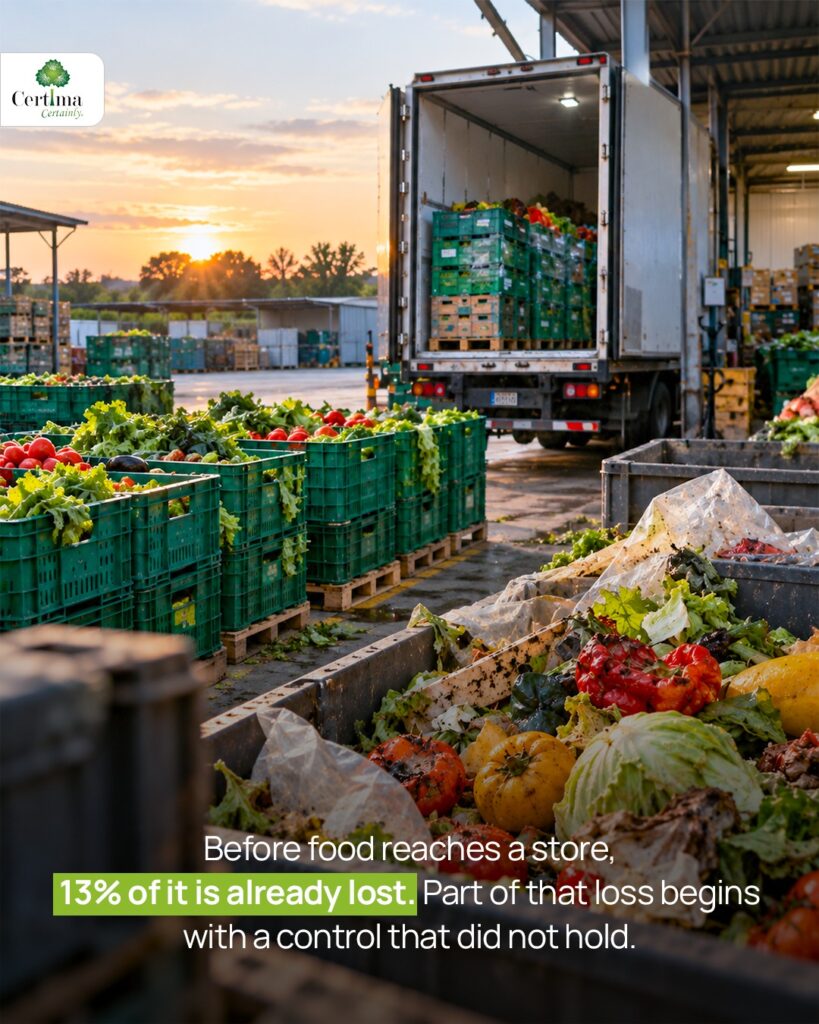
Today is the International Day of Awareness of Food Loss and Waste. FAO estimates that around 13% of the world’s food is lost in the supply chain between post harvest and retail, food that never reaches a consumer at all.
Part of this loss begins with situations food safety systems are designed to prevent: a temperature deviation in storage or transport, pest activity, contamination during processing, or product blocked because its safety can no longer be confirmed. The food may have been safe before the control failed. Afterwards, it can only be destroyed.
Seen this way, food safety controls are also loss prevention. The same discipline protects the consumer and the food itself.
What comes in the way of preventing avoidable loss
- Temperature deviations detected too late to save the product
- Stock rotation described in procedures but not followed in practice
- Pest control and storage treated as routine checks, not active controls
- Non conforming product left without clear decisions until it must be disposed of
- Losses recorded as a cost, but not analysed for their cause
When food is destroyed because a control failed, it is both a safety event and a waste event.
Audit-focused insights
From an audit perspective, these controls are evaluated through:
- Temperature records across storage and transport, and how deviations are handled
- Evidence that stock rotation is applied in practice
- Effectiveness of pest control and storage management over time
- Clear procedures for blocking and deciding on non conforming product
- Root cause analysis of recurring product losses
Certima’s Mission
As an impartial certification body, Certima assesses compliance with international food safety measures. Certification enables businesses to demonstrate that they meet regulatory and client requirements for food safety and quality through rigorous compliance.
While Certima does not provide operational guidance, audits serve as a valuable tool for businesses to strengthen transparency and trust in the delivery of safe food products, while evaluating their food safety strategies and supply chain integrity.