


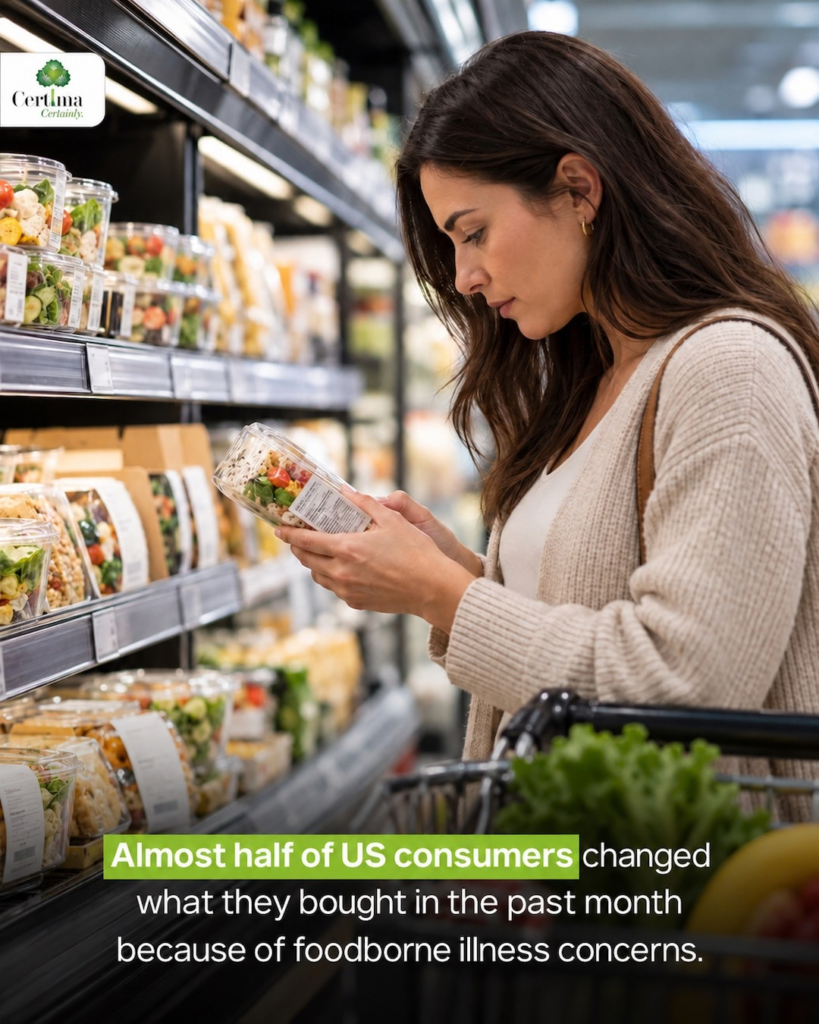
Survey data released in September by the University of Illinois and Purdue University shows a clear shift in the United States. The share of consumers who strongly agree that the food system produces safe food fell to about 30% in August. Almost half changed their grocery purchases, and 40% changed what they bought at restaurants, because of foodborne illness concerns.
In Lithuania, the national food agency reports an increase in consumer reports of potential food violations. Consumers are paying closer attention, and they act on what they see.
When trust declines, claims alone do not restore it. What rebuilds confidence is assurance that someone independent has verified: that controls exist, that they work, and that they are checked against a recognised standard.
What comes in the way of lasting consumer trust
- Food safety communicated as a promise rather than as something verified
- Limited transparency about how products and suppliers are assessed
- Incidents handled quietly, leaving consumers to rely on headlines
- Confusion about what a certificate actually confirms
- Trust assumed to be stable, instead of earned continuously
Trust is not built when things go well. It is tested when people start to doubt.
Audit-focused insights
From an audit perspective, the foundations of trust are evaluated through:
- Independent assessment against recognised international standards
- Impartiality of the certification process and those who carry it out
- Consistency between what a company communicates and what it can demonstrate
- Effective handling of complaints, incidents, and recalls
- Continuous verification, not a one time confirmation
Certima’s Mission
As an impartial certification body, Certima assesses compliance with international food safety measures. Certification enables businesses to demonstrate that they meet regulatory and client requirements for food safety and quality through rigorous compliance.
While Certima does not provide operational guidance, audits serve as a valuable tool for businesses to strengthen transparency and trust in the delivery of safe food products, while evaluating their food safety strategies and supply chain integrity.
Disclaimer This post references publicly reported survey data and information from a national food agency. It reflects general audit observations and does not constitute consultancy or operational guidance.
Source: University of Illinois and Purdue University consumer survey, via KFF Health News; Food Safety News