


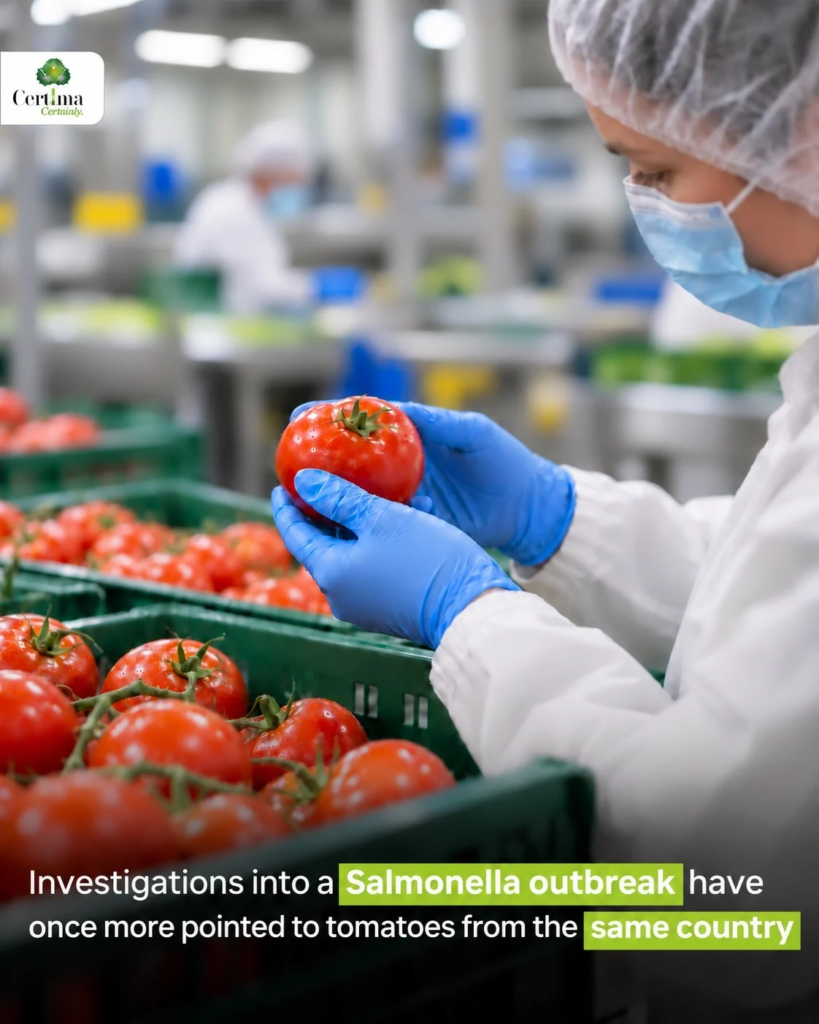
In the 2025 to 2026 season, a Salmonella Strathcona outbreak caused 116 cases in Germany, 100 confirmed and 16 probable. Investigations once again pointed to Italian tomatoes as the source. It is not a new finding: the illnesses are part of a long standing annual outbreak trend.
This changes the nature of the risk. A first outbreak can be unexpected. A pattern that repeats season after season is a known hazard, and known hazards carry a different expectation: that they are anticipated in risk assessments, supplier monitoring, and testing before the season starts, not investigated after it ends.
For buyers and manufacturers using fresh produce, the question is not whether every supplier is affected. It is whether recurring, documented risks are actually reflected in how raw materials are approved and verified.
What comes in the way of managing recurring risks
- Risk assessments that are not updated with known outbreak history
- Supplier approval focused on documents, not on the specific hazards of the product and origin
- Testing plans that stay the same regardless of seasonal risk
- Outbreak information from public sources not monitored or discussed internally
- Each season treated as a new start instead of building on the previous one
A risk that has been documented for years should be visible in the controls, not only in the news.
Audit-focused insights
From an audit perspective, the management of recurring risks is evaluated through:
- Raw material risk assessments that reflect known hazards and outbreak history
- Outbreak history of a raw material and origin reviewed before each season, not only after incidents
- Verification and testing plans adjusted for seasonal or recurring hazards
- Use of external information, such as outbreak reports and alerts, in risk reviews
- Evidence that controls changed after a hazard repeated, rather than staying the same each year
Certima’s Mission
As an impartial certification body, Certima assesses compliance with international food safety measures. Certification enables businesses to demonstrate that they meet regulatory and client requirements for food safety and quality through rigorous compliance.
While Certima does not provide operational guidance, audits serve as a valuable tool for businesses to strengthen transparency and trust in the delivery of safe food products, while evaluating their food safety strategies and supply chain integrity.